


Have you ever run a comb through your hair and stared at what came out of it, wondering whether that's a normal Tuesday or the start of something you can't undo? Every guy who's spent time in a hair salon chair has had that moment: the stylist mentions your hairline, or the overhead light catches your scalp in the mirror a little too clearly, and your stomach drops.
The problem is that once that fear kicks in, you go looking for answers and get buried in bad ones. Forums, YouTube comments, and your uncle at Thanksgiving all have theories: it's the water, it's your hat, it's testosterone, it's stress, it's the shampoo. Some of that is grounded in real biology. Most of it is noise dressed up as fact, and believing the wrong myth can cost you months of time you don't get back.
That's the gap we want to close here. At Men ID, we spend a lot of time talking with men who are right where you might be now: noticing changes, feeling a little rattled, and trying to sort real hair loss treatment options from wishful thinking. If you're already seeing thinning specifically up top, our guide to early signs of crown hair thinning is worth reading alongside this one, since crown thinning behaves differently than a receding hairline and responds to different timing.
What Is Hair Loss, Really?
Hair loss covers several different conditions, not just one. The most common form in men is androgenetic alopecia, or male pattern baldness, a hereditary condition where genetically sensitive follicles shrink gradually over time, and it can start as early as your teens or twenties.
"Hereditary hair loss with age is the most common cause of hair loss, and it can start as early as a man's teens or twenties."
There's also telogen effluvium, a temporary shedding phase usually triggered by stress, illness, crash dieting, or a major hormonal shift, and it's often mistaken for permanent balding when it isn't. Then there's traction alopecia, caused by tight hairstyles pulling on the follicle, and alopecia areata, an autoimmune condition that causes patchy loss. Knowing which one you're dealing with changes everything about what actually helps.

Does Wearing a Hat or Washing Your Hair Too Often Cause Baldness?
No. Hats don't suffocate your follicles, and washing your hair daily doesn't strip it bald. Hair loss myths like these persist because shedding is more visible right after a wash or when you pull off a cap, but the shedding was already going to happen. The hat and the shampoo just made you notice it.
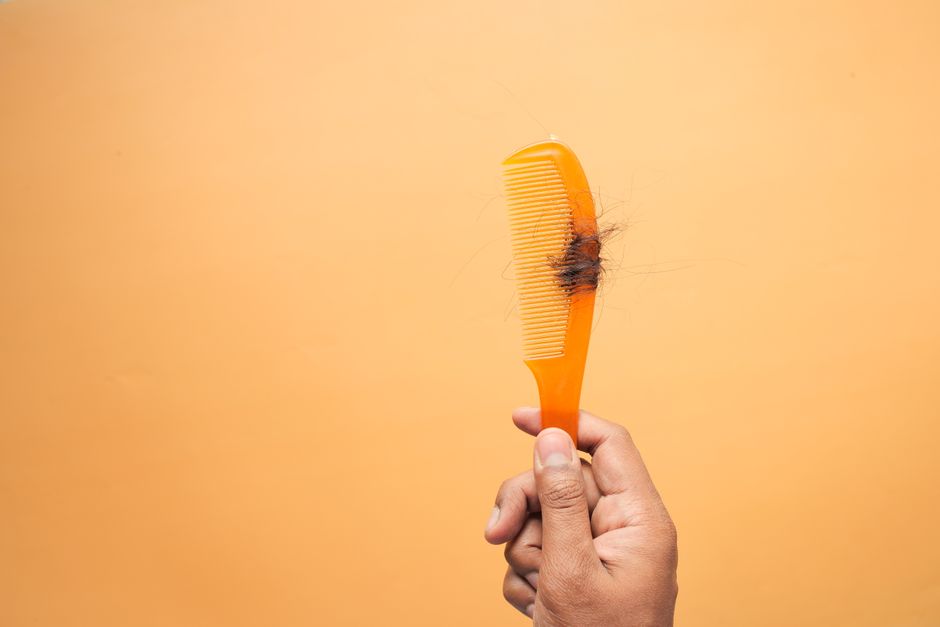
Here's what's actually happening: everyone loses somewhere between 50 and 100 hairs a day as part of the normal growth cycle, hat or no hat. Skip a few washes and those loose hairs build up, then fall out in a noticeable cluster the next time you shower, which feels alarming even though it's the same hair you would have shed anyway. When hair loss is genuine and progressive, the real drivers are genetics, hormones, certain medications, and a handful of medical conditions. Not your baseball cap.
How Does Hair Loss Actually Happen in the Follicle?
In androgenetic alopecia, testosterone converts into a stronger hormone called DHT, or dihydrotestosterone, through an enzyme called 5-alpha reductase. DHT binds to receptors in genetically sensitive follicles and shrinks them in a process called miniaturization, producing progressively thinner hair until the follicle stops growing visible hair at all.
According to the National Library of Medicine, this follicle shrinkage is directly tied to DHT sensitivity, which is inherited and varies from man to man (medlineplus.gov). This is also why timing matters so much. A follicle that's fully miniaturized and dormant is much harder to bring back than one that's still active but shrinking, which is the whole logic behind catching thinning early instead of waiting until it's obvious in the mirror.
What Are the Real Signs of Hair Loss You Should Watch For?
Most men don't wake up bald one morning. Hair loss is gradual, and the earliest signs are easy to rationalize away as a bad haircut or a stressful month. Catching the real pattern early gives any hair loss treatment far better odds of working.
Here's what actually tends to show up first, roughly in this order:
- A widening part line that wasn't there a year ago
- A hairline that's crept back at the temples, forming a more pronounced "M" shape
- Thinning specifically at the crown, often noticed by other people before you see it yourself
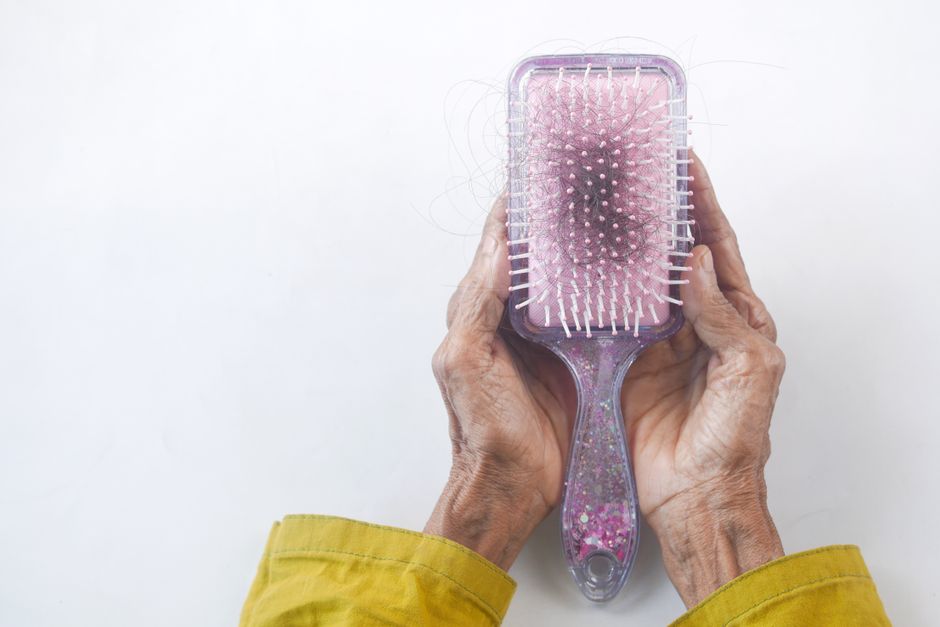
- More hair than usual on your pillow, in the drain, or on the comb
- Individual strands that look noticeably finer or shorter than they used to
- Increased scalp visibility under direct or overhead light
- Slower regrowth after a haircut compared to a few years ago
If you're noticing more than one or two of these, especially a widening part or noticeably finer strands, it's worth acting now rather than waiting for confirmation you can see from across the room.
Is Hair Loss Treatment Right for Everyone?
No, hair loss treatment isn't a universal fix, and pretending otherwise wouldn't be honest. If shedding comes from stress, illness, or a crash diet, a pattern called telogen effluvium, it usually resolves on its own within three to six months once the trigger is addressed. Patchy loss or shedding tied to thyroid issues needs a doctor, not a shampoo aisle.
If you're losing hair in distinct patches rather than a gradual, even pattern, that points toward alopecia areata, an autoimmune condition that needs a dermatologist's evaluation rather than a topical fix. Thyroid disorders, iron deficiency, and certain medications can also cause shedding that mimics pattern baldness without actually being it, and treating the real cause matters more than treating the hair. For genuine androgenetic alopecia, though, consistency with a real hair loss treatment routine, paired with the right nutritional support, gives you the best shot. We've written separately about which supplements for men actually hold up to scrutiny, because micronutrient status genuinely affects how your hair grows in, even when genetics is the primary driver.
What Should You Actually Expect From Hair Loss Treatment?
Expect three to six months of consistent use before shedding slows down, and six to twelve months before visible thickening shows up in photos. Anyone promising dramatic results in a few weeks is selling a feeling, not a follicle. Set your calendar accordingly, not your hopes.
"Hair regrowth treatments typically need to be used consistently for three to six months before you notice a difference, and it can take up to a year to see the full results."
In our experience talking with men who stick with a routine, the ones who see the best outcomes treat it like a habit, similar to brushing your teeth, rather than something they try for two weeks and abandon when nothing's visibly changed yet. Board-certified dermatologists consistently point to inconsistent use as the number one reason hair loss treatments appear to fail when the product itself was never the problem.
Practical Tips for Protecting the Hair You Still Have
Whatever stage you're at, a handful of habits make a measurable difference alongside any hair loss treatment you choose.
- Handle wet hair gently. It's at its weakest right after a shower, so skip the aggressive towel-drying and rough brushing.
- Read the ingredient label before you buy anything. Look past the marketing claims on the front and check what's actually formulated into the bottle.
- Don't chase every new hair loss treatment trend. Pick one evidence-based approach and give it the months it actually needs before judging it.
- Support your hair from the inside, not just the outside, with adequate protein, iron, and zinc.
- Go easy on heat styling and tight hats worn for hours at a stretch, which stress hair that's already vulnerable.
- See a dermatologist if shedding is sudden, patchy, or paired with scalp pain or itching, since that points to something other than pattern baldness.
If your hair already feels weak or brittle rather than just thinning, that's a related but separate problem, and we cover how to fix it in our guide to how to strengthen weak and brittle hair. And if you'd rather lead with nutrition and formulation than lean purely on treatment, our piece on natural ingredients that actually support hair thickness walks through what to look for, INCI names included, next time you're standing in the hair store aisle trying to decode a label.
Hair loss myths are stubborn because they let you avoid making a decision, and putting off that decision is usually the most expensive option of all. Get honest about which category you actually fall into, get real about the timeline, and pick one evidence-based hair loss treatment approach instead of hopping between six of them every few weeks. A topical treatment, a nutrition adjustment, or a conversation with a dermatologist about what's really driving the shedding: any of those beats another six months of guessing. The sooner you start, the more follicles you'll have left to work with. Neville Goff and the rest of the Men ID team built this resource because we'd rather you make that call with real information than another myth from a barbershop conversation.