


You notice it in a photo first. Or maybe your barber mentions it during a trim at the hair salon. Either way, catching a glimpse of your thinning crown can feel like a gut-punch. The patch seems to appear overnight, but the truth is it’s been building quietly for years. Catching it early is the difference between keeping your hair and watching it disappear.
Crown thinning is one of the most common forms of male pattern baldness, affecting millions of men well before middle age. According to the Mayo Clinic, androgenetic alopecia, the medical name for hereditary hair loss, affects roughly 50 million men in the United States alone. It follows a predictable path, starting at the temples or crown, but that doesn’t mean you have no say in how it plays out.
At Men ID, we’ve spent years breaking down what actually works for men’s hair health, not just in products but in habits, knowledge, and realistic expectations. Understanding why crown thinning happens, and recognizing it early, is your first real weapon. If you’ve ever wondered whether men’s and women’s hair thin in fundamentally different ways, the answer is yes, and those differences matter when you’re choosing a prevention approach.

What Are the First Signs of Crown Balding?
The earliest signs of crown balding are a wider part line at the top of your head, increased scalp visibility under bright or overhead light, and noticeably more hair collecting on your pillow or in the shower drain. Most men don’t recognize these changes until six to twelve months after the process has already begun.
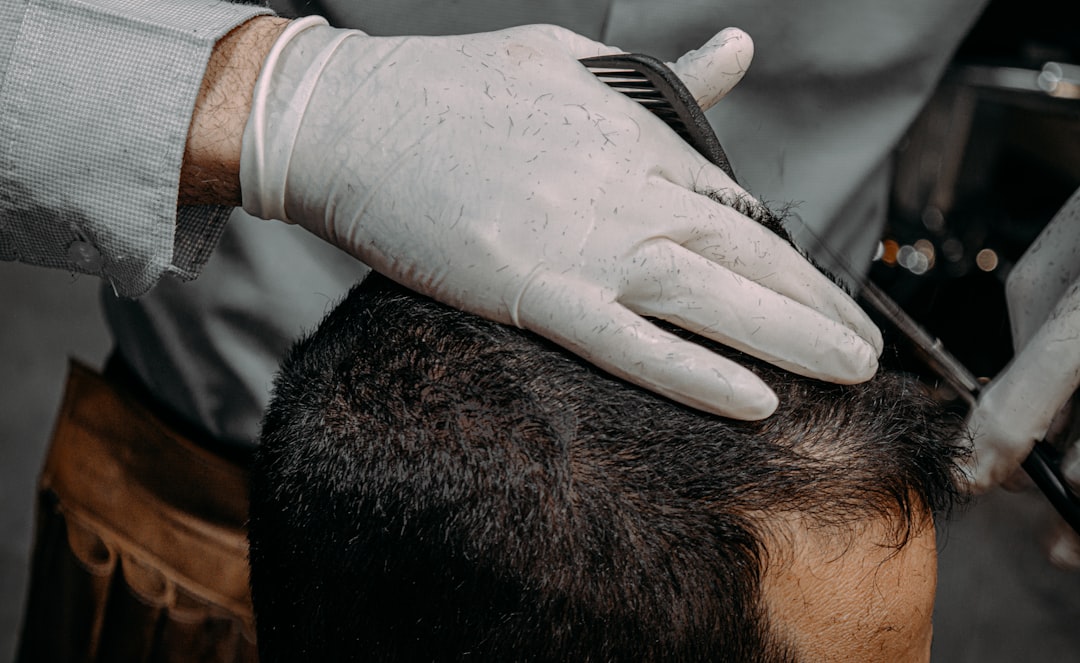
Thinning at the crown usually starts as a subtle widening rather than a defined bald spot. Your hair feels less dense when you run your hand over the back of your head. Hair styles that used to look effortless now need more product to create volume. A stylist at a good hair salon will often spot it before you do, because they’re looking at your crown from above every few weeks with fresh eyes.
Here’s what actually matters at this stage: the follicles aren’t dead yet. They’re miniaturizing, producing thinner, shorter hairs with each growth cycle. That’s good news. Act now and you can meaningfully slow or stop the progression.
Crown Balding Stages: What’s the Pattern?
Dermatologists use the Norwood Scale to classify male pattern baldness. Crown involvement typically shows up at Stage III or IV and follows this general progression:
- Stages I-II: Minor recession at the temples, no visible crown involvement yet.
- Stage III Vertex: A visible thinning patch or small bald area develops at the crown.
- Stage IV: The crown patch enlarges; a band of hair still separates it from frontal recession.
- Stage V-VI: The crown and frontal areas begin to merge, leaving a horseshoe pattern.
- Stage VII: Only a narrow band of hair remains along the sides and back of the head.
Progression speed varies dramatically between men. Some move through several stages in their twenties. Others hold steady at Stage III for decades. Genetics, stress, nutrition, and whether you start treatment early all influence the pace.
Does Balding Early Mean High Testosterone?
No. Early balding doesn’t signal unusually high testosterone. What it signals is that your hair follicles are genetically sensitive to dihydrotestosterone (DHT), a byproduct of normal testosterone metabolism. Your hormone levels can be completely average and you can still go bald.
DHT binds to receptors in scalp follicles and gradually shrinks them over successive growth cycles. Men with androgenetic alopecia have follicles programmed to be hypersensitive to DHT, regardless of their total androgen levels. The idea that baldness equals elevated testosterone is a cultural myth. The biology doesn’t support it.
“Androgenetic alopecia involves the miniaturization of susceptible hair follicles caused by the action of androgens, particularly dihydrotestosterone. It is the most common cause of hair loss in men.”
— National Institutes of Health, StatPearls: Androgenetic Alopecia
How to Stop Hair Thinning at Crown Male?
Stopping crown thinning comes down to interrupting the DHT cycle at the follicle level, either by blocking DHT, stimulating blood flow to miniaturizing follicles, or both. The most evidence-backed options are:
- Minoxidil (topical): FDA-approved and available over the counter. Applied directly to the scalp, it widens blood vessels and stimulates follicle activity. Most effective when started early in the thinning process.
- Finasteride (oral): A prescription DHT blocker. Highly effective but requires a doctor’s consultation given potential hormonal side effects.
- Ketoconazole shampoo: An antifungal with mild DHT-blocking properties at the scalp. Best used as an adjunct, not a standalone hair loss treatment.
- Low-level laser therapy (LLLT): Laser combs and helmets have modest supporting evidence for stimulating follicles, particularly in early-stage thinning.
- Anti-dandruff and moisturizing scalp treatments: Reducing scalp inflammation creates a healthier environment for follicle survival, especially when combined with other treatments.
“Minoxidil applied to the scalp is the most widely used treatment for male pattern baldness. Studies show it can slow hair loss and help promote regrowth in some men.”
How to Reverse Male Pattern Baldness Naturally
True reversal of androgenetic alopecia without medical treatment is limited. But “natural” approaches can slow progression meaningfully and improve the scalp environment where follicles are still active. Don’t dismiss them as secondary, because they compound over time.
Neville Goff, who covers men’s hair health here at Men ID, points out that most men drastically underestimate scalp health before they ever think about a hair loss treatment. A clean, hydrated scalp free of chronic dandruff and inflammation gives marginal follicles a measurably better environment to survive in.
These are the practical steps with real evidence behind them:
- Daily scalp massage: Four minutes of standardized scalp massage has been shown in clinical trials to increase hair thickness by stretching the dermal papilla cells beneath the follicle.
- Optimize protein and iron intake: Deficiencies in both are directly linked to accelerated shedding. Address diet first before defaulting to supplements.
- Manage chronic stress: Elevated cortisol pushes more follicles simultaneously into the shedding phase, a condition called telogen effluvium. Stress doesn’t cause pattern baldness, but it absolutely accelerates it.
- Cut heat styling and chemical processing: Damaged strands break above the follicle, making thinning look far worse than the underlying follicle situation actually is.
- Use a moisturizing conditioner consistently: Well-hydrated, strong hair resists breakage and holds visual density while follicles remain active. It’s not vanity. It’s buying time.
- Schedule regular check-ins at your hair salon: A good stylist tracks density changes you’ll miss on your own, and can alert you before progression accelerates.
None of these steps alone will halt genetic pattern baldness. Combined with proven clinical treatments, though, they create the conditions where those treatments work harder and last longer. That’s the real strategy: stack the interventions, not replace one with another.
Crown thinning noticed early is crown thinning you can do something about. The men who keep their hair longest aren’t the ones with the best genetics. They’re the ones who stopped pretending the mirror was wrong and started acting. The Men ID resource library covers everything from scalp health to the right conditioning routine for your specific hair type. Take that first step before the window narrows. Your follicles are still listening.
About the Author