
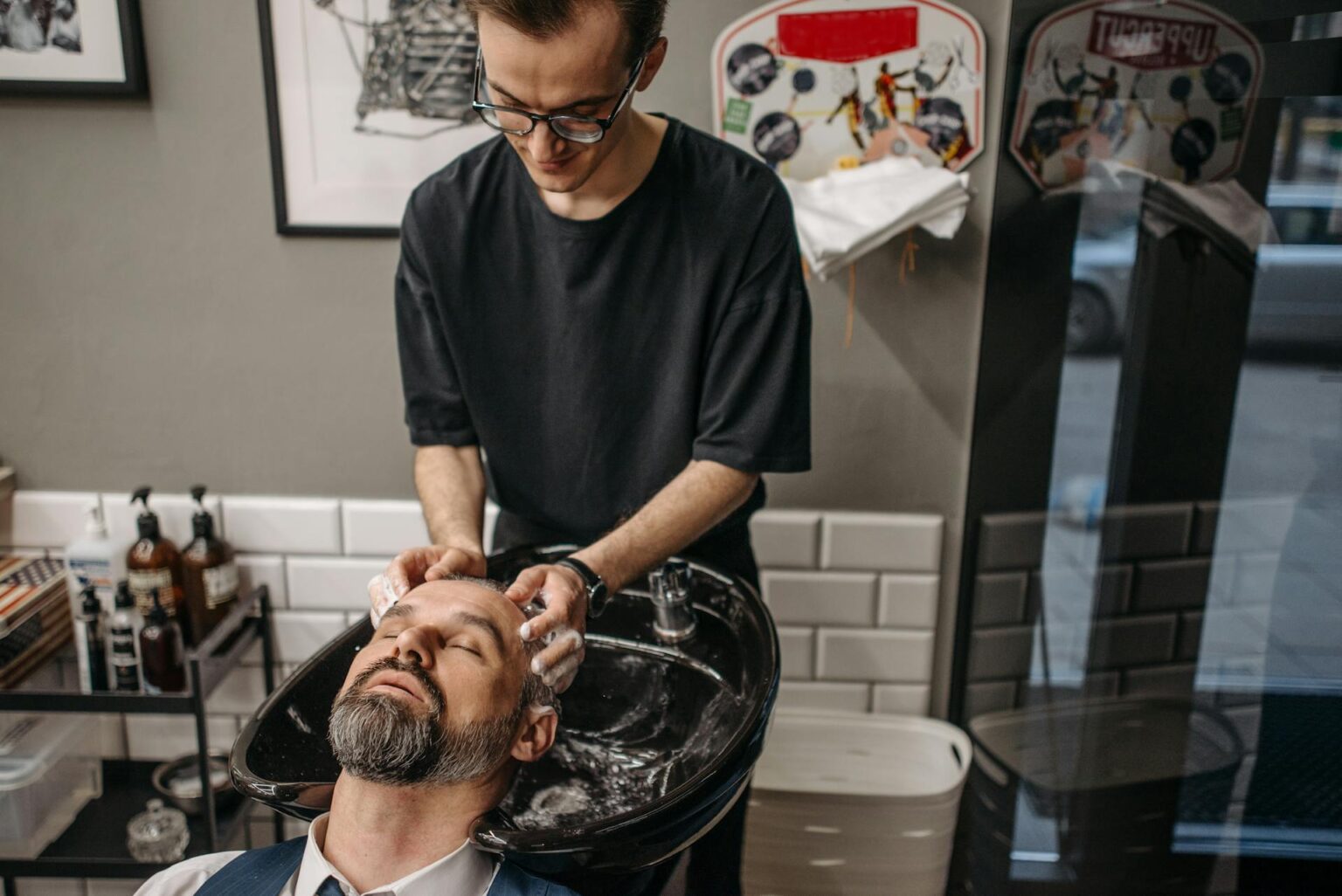
Splitting hairs: How does men’s hair differ from women’s hair?
The fact that men and women aren’t so different after all is a realization that has thankfully already dawned on some. But differences do exist: one clue to this can be found when buying hair care products. We’ll explain how your hair’s needs depend on gender and how this should influence your choice of hair care.
Woman and man laughing while eating on the couch
No difference between men’s and women’s hair?
From a biological perspective, the hair follicles of men and women are indistinguishable. That is, the skin and connective tissue surrounding the hair root are identical, and so is the hair itself. But be careful…
If you accidentally used your girlfriend’s shampoo in the shower again , it’s not a big deal. Your hair probably smells deliciously of hibiscus and vanilla now. But: If you’ve been secretly using it for months, you might experience increased dandruff! So why is a “women’s shampoo” suddenly causing dandruff for you, and why do we sell M:ID – hair care specifically tailored to men’s needs? Isn’t all hair the same after all?
It’s not quite that simple… There are four distinguishing features between men’s and women’s hair:
Care behavior
Tallow production
Hormonal differences
Fragrance preference
1. Care behavior
Women usually wear their hair longer and therefore need to care for it differently. Women tend to wash their hair less often than men. Manufacturers take this difference in hair care habits into account: men’s shampoo, which is often used daily, must not irritate or dry out the scalp. Shampoo for women, on the other hand, can be a bit stronger, as it is used less frequently and usually has to clean more hair. If a man uses a more aggressive shampoo daily, this can quickly lead to a dry scalp and thus to unwanted dandruff. (You can read more about dandruff here.)
2. Tallow production
Attached to the hair follicle of each hair is a sebaceous gland. This gland secretes sebum to protect the scalp. If these glands are very active, both men and women tend to have oily hair. The male hormone testosterone has a particularly strong influence on sebum production and stimulates it – young men going through puberty know this all too well. In women, however, sebum production in the hair remains lower. Oily hair also presents another challenge: a yeast infection can cause dandruff. Therefore, good hair care for men takes into account the specific needs of their hair and scalp.
3. Hormones
Perhaps the most important factor when it comes to the needs of men’s and women’s hair are cocktails… hormone cocktails.
Testosterone, in particular, has a significant impact on your hair. It’s produced in both men and women, but differs in concentration and effect. This male hormone not only influences sebum production but can also shorten the hair growth phase and miniaturize the hair follicle. This often leads to baldness or reduced hair volume, primarily affecting men. If you’d like to learn more about hair loss, we have an article for you here .
Active ingredients like carnitine tartrate, taurine, and echinacea can slow down or even stop the described process in men. The use of these three substances in shampoos for women, for example, makes less sense, as they suffer from this form of hair loss significantly less often.
4. Fragrance preferences
Why do cosmetic products for women often have a floral scent, while those for men tend to be more herbal? Honestly, we don’t know. But at M:ID, we’ve definitely developed your products so that you’ll want to take a deep breath while massaging them in. A hint of menthol instantly provides a feeling of freshness and not only clears your nose, but somehow also your head.
The fact is, women’s and men’s products differ in scent. However, this is purely subjective and, one could say, doesn’t affect the hair at all… at the root.
Let’s summarize.
Are men’s and women’s hair the same? Yes. Should they use the same hair care products? No.
Men’s and women’s hair is identical. However, it grows from bodies that have biologically and sociologically different needs when it comes to grooming products. Sure, you can use that fragrant vanilla shampoo every now and then, but basically: use a product that’s just for you and only for your needs. Extra masculine (no matter what scent you choose).
About the Author